




22 June 2026
Introduction
A cancer diagnosis compresses time in a way that few other medical situations do. The urgency to act to start something, to do anything is real and understandable. But the decisions made in the first weeks after diagnosis shape everything that follows: which surgery, which drug regimen, whether a clinical trial is an option, what the sequencing of treatment looks like over the next six months. Getting those decisions right matters more than getting them fast. A cancer treatment second opinion is not an expression of doubt in your oncologist it is a standard practice in oncology that the most experienced cancer clinicians actively encourage. It catches the cases where the original biopsy needs re-reading by a specialist pathologist, where a regimen that is standard at one centre is not the most current approach at a high-volume centre, and where a clinical trial the patient never heard about turns out to be the most appropriate first-line option for their specific tumour profile.
Overview of Getting a Second Opinion Before Cancer Treatment
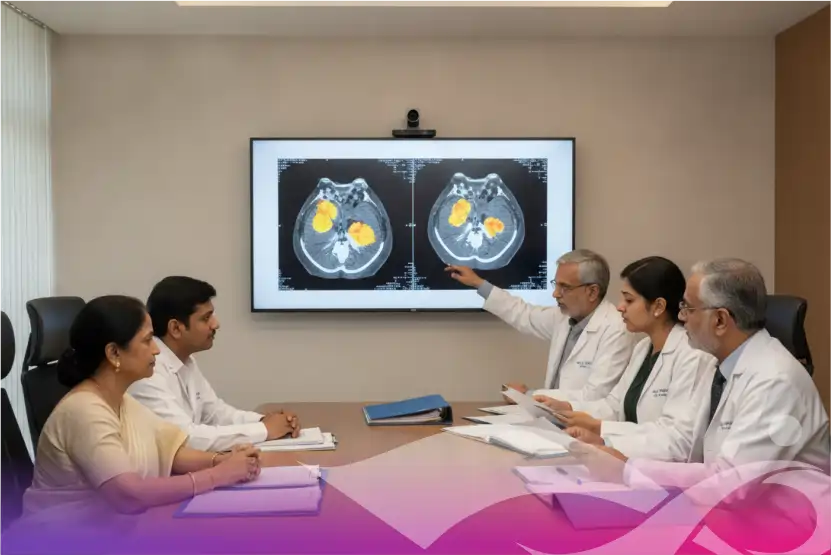
A second opinion in oncology means presenting your full diagnostic workup pathology slides and report, imaging studies and their reports, molecular profiling results, staging workup, and any proposed treatment plan to another specialist who reviews everything from scratch. The reviewing oncologist is not simply validating or rejecting the first opinion; they are completing an independent assessment that may confirm the original recommendation, suggest modifications, propose a different approach entirely, or identify additional investigations that should be completed before treatment begins.
The frequency with which second opinions change clinical management in oncology is higher than most patients expect. Studies consistently show that 10 to 30 per cent of cancer second opinions result in a meaningful change to diagnosis or treatment recommendation, and the definition of "meaningful" here is a change that the patient would want to know about. The availability of online cancer consultation platforms has made accessing a specialist at a major cancer centre substantially more practical than it was a decade ago, removing the geographical barrier for patients outside metropolitan areas.
Benefits of Getting a Second Opinion Before Cancer Treatment
1. Pathology review
The starting point of cancer treatment is the pathological diagnosis what the tumour is, what its grade and subtype are, and whether the tumour has specific molecular characteristics that determine treatment. Pathology is not infallible. Rare tumour subtypes, tumours with unusual morphology, and cases where the tissue sample is limited are all situations where a second pathology review by a specialist in that tumour type can clarify or revise the diagnosis. A revised pathological diagnosis is not a failure of the original pathologist it is the outcome of expert subspeciality review that the original pathologist may not have had access to.
2. Evaluation of treatment options
Standard-of-care recommendations are national and international guidelines, but their application to individual patients and the selection of appropriate protocols require clinical judgement that varies between clinicians and centres. A cancer treatment second opinion at a high-volume specialist centre may identify that the proposed surgery is more extensive than necessary or not extensive enough; that a different drug sequence changes outcomes for this specific tumour molecular subtype; or that the planned treatment should be preceded by neoadjuvant therapy to improve surgical conditions. These are not esoteric concerns they are the kinds of clinical nuances that routinely separate good outcomes from optimal ones.
3. Access to clinical trials
Clinical trials are not equally distributed across all hospitals. Academic medical centres and cancer centres of excellence have substantially more active trials than community hospitals. A patient who receives their initial diagnosis and treatment recommendation at a community hospital may never be informed that a clinical trial exists for their specific cancer type, biomarker profile, and treatment line because their treating oncologist is not running that trial and may not be aware of it. An expert oncologist consultation at a centre with an active clinical trials programme exposes the patient to options that would otherwise remain invisible.
4. Confidence in decision-making
Even when two oncologists recommend the same approach, the second opinion serves a purpose. For a patient facing a major surgery, a prolonged chemotherapy regimen, or a treatment with significant long-term functional consequences, knowing that two independent specialists reached the same conclusion with the same data reduces the anxiety that attaches to "What if there was a better option I didn't know about?" That psychological benefit is real and has documented effects on treatment adherence and the patient's ability to cope with treatment side effects.
5. Avoiding unnecessary treatments
Second opinions do not only add treatments they also prevent unnecessary ones. There is documented evidence that some cancer patients undergo procedures that are not indicated for their specific diagnosis more extensive surgery than is required for cure in early-stage disease, chemotherapy in settings where the benefit is marginal relative to toxicity or radiation in situations where observation is equally appropriate. The cancer second opinion service identifies these cases and recommends a less aggressive approach is delivering real clinical value.
Process of Getting a Cancer Second Opinion
Gather your medical records
The quality of a second opinion depends on the quality of the information the reviewing specialist receives. The complete workup should include the original pathology report and, if possible, the actual slides or tissue block; all imaging studies in digital format (not just the written reports); molecular profiling results from next-generation sequencing or immunohistochemistry where performed; staging investigation results; and any treatment plan already proposed. Missing documents mean the reviewing specialist is working with incomplete information, and the assessment is correspondingly less reliable.
Schedule an expert consultation
An online cancer consultation with a specialist at a major cancer centre can often be arranged within a week to ten days, requiring only that records be transmitted in advance. The consulting specialist typically reviews all materials before the scheduled video appointment and comes to the consultation having already formed an independent view, making the time efficient. For patients diagnosed at smaller hospitals or in cities without major oncology centres, access to specialists is now qualitatively different from what was possible before telemedicine normalised remote consultations.
Review and discussion
The consultation should cover whether the reviewing specialist agrees with the diagnosis and staging; whether the proposed treatment plan reflects current evidence and guidelines; what alternatives exist and why the first specialist may or may not have suggested them; what the expected outcomes are with different approaches; and whether clinical trials are available and the patient is potentially eligible. Patients should bring a family member or trusted person who can help retain and process the information discussed.
Compare recommendations and decide
Where the two opinions align, the decision is straightforward proceed with confidence. Where they differ, the patient has legitimate grounds to ask both specialists to explain their reasoning in light of the other's recommendation. In most cases, apparent differences resolve into a shared understanding that one approach is most appropriate for this specific patient but the process of having both specialists engage with the discrepancy, they frequently produce a more thoroughly reasoned and better-communicated treatment recommendation than either would have provided without the comparison.
Why This Matters for Cancer Patients
Cancer treatment is not a commodity. The same diagnosis in two patients with different molecular tumour profiles, different performance status, different co-morbidities, and different personal values around quality-of-life trade-offs warrants different treatment recommendations. The oncologist who treats the most patients with a specific tumour type, who participates in the tumour boards at a comprehensive cancer centre, who is running the relevant clinical trials, and who has seen the range of outcomes with different approaches is a different clinical resource than one who encounters that tumour type less frequently. An expert oncologist consultation at a specialist level is not distrust of the primary oncologist it is appropriate utilisation of the expertise hierarchy in medicine that exists for precisely this reason.
Expert Advice for Patients Seeking a Second Opinion
-
Act within days, not weeks — most cancers do not require treatment to begin within 48 hours of diagnosis; taking one to two weeks to obtain a second opinion at a specialist centre is medically sound and may significantly change the treatment plan
-
Request the tissue block or slides, not just the pathology report — many academic centres will re-read your slides independently; this is the highest-quality form of pathology second opinion and requires physical tissue, not just a written report
-
Prepare specific questions, not general ones — "Is this the best treatment?" generates a less useful consultation than "Is the proposed surgery appropriate for a stage IIB tumour, or should I be considered for neoadjuvant chemotherapy first?"
-
Ask explicitly about clinical trials — the cancer second opinion at an academic centre routinely checks trial eligibility; if you do not ask directly, this may not be raised proactively
-
Inform your primary oncologist you are seeking a second opinion — most will support this and some will facilitate the records transfer; if a physician actively discourages a second opinion, that response itself is informative
-
Use an cancer consultation to access expertise that is not locally available — geography should not determine which treatment options a patient is aware of; virtual consultation removes this barrier effectively
Conclusion
The weeks between cancer diagnosis and treatment initiation are among the most consequential of a patient's medical journey. The decisions made or not made during this period shape outcomes over the months and years that follow. A cancer treatment second opinion is not a procedural formality it is a clinically substantive step that catches errors, expands options, confirms the right approach, and gives patients the information base they need to make genuinely informed decisions. An expert oncologist's opinion at a specialist centre, whether in person or through an online cancer advice, is one of the most high-yield things a newly diagnosed cancer patient can do before treatment begins. Patients who skip this step because they feel an urgency to start treatment as soon as possible occasionally discover, months later, that the urgency was misplaced and the decision was not as well-founded as they had assumed.