




16 November 2026
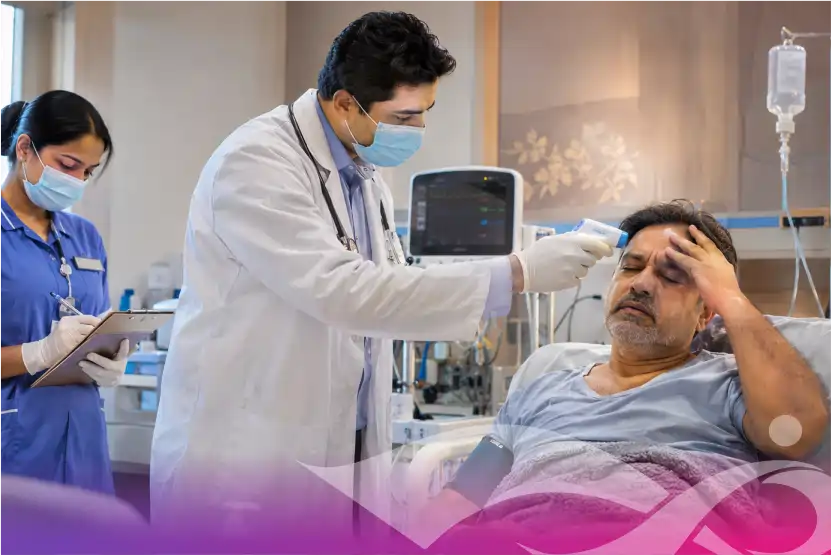
A fever that would barely register as a concern in a healthy person can mean something far more serious during chemotherapy. Fever during chemotherapy treatment in India is one of the most common reasons patients end up needing urgent hospital care, because chemotherapy drugs lower the white blood cell count that would normally fight off infection before it spreads.
Why Fever Is Different During Chemotherapy
Chemotherapy works by targeting fast-dividing cells, and this includes the bone marrow cells responsible for producing white blood cells. When those counts drop, a condition called neutropenia sets in, leaving the body with far less defence against bacteria that it would otherwise handle without any noticeable symptoms. A fever in this state often signals that an infection has already taken hold somewhere in the body, sometimes without any other obvious sign pointing to where.
This is why oncologists treat fever during chemotherapy with far more urgency than a general physician would treat a fever in an otherwise healthy adult. The gap between a low-grade fever and a life-threatening infection, known as febrile neutropenia, can close within hours rather than days.
When Should a Cancer Patient Go to the Hospital for Fever?
A temperature of 100.4°F (38°C) or higher, sustained for an hour or appearing suddenly, should be treated as a reason to contact the oncology team immediately rather than waiting to see if it passes.
-
Any fever occurring within 7 to 14 days after a chemotherapy cycle, which is typically when blood counts are at their lowest
-
Fever accompanied by chills, rapid heartbeat, confusion or a drop in blood pressure
-
Fever with no obvious cause, such as a cold or sore throat
-
A temperature that keeps rising despite paracetamol, since self-medicating at home can mask how serious the underlying infection is
Patients are usually advised against taking fever-reducing medication on their own before being evaluated, since this can temporarily hide symptoms that doctors need to see clearly.
What Happens at the Hospital
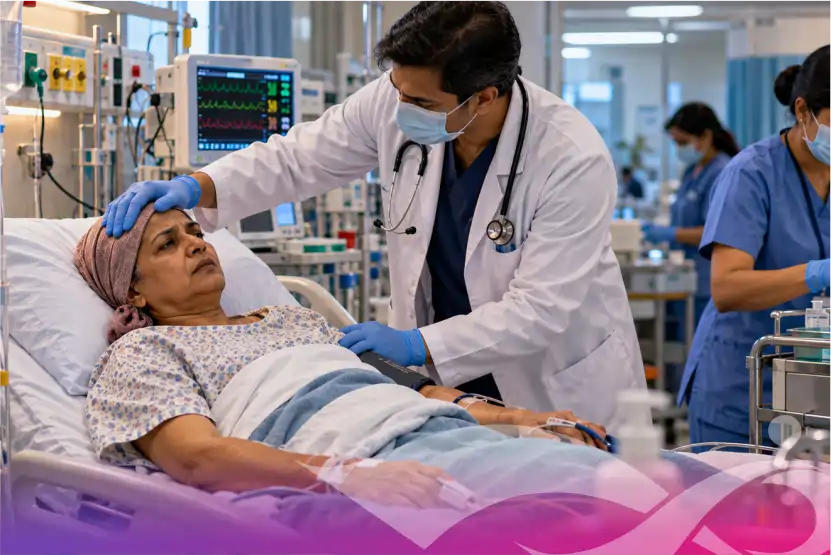
Once a patient with suspected febrile neutropenia reaches the hospital, the typical process involves a blood count check, blood cultures to identify the source of infection, and starting intravenous antibiotics quickly, often before the infection is even confirmed. This approach, sometimes described as treating first and testing simultaneously, exists because delaying antibiotic treatment in this situation carries real risk.
A medical oncologist consultation in Noida at this stage helps determine whether the chemotherapy schedule needs to be paused, adjusted, or supported with growth factor injections that help the bone marrow recover white blood cells faster for future cycles.
Where Can Cancer Patients Get Emergency Medical Care in Noida?
Access to a facility that can respond to febrile neutropenia around the clock matters as much as the treatment plan itself. IOCI functions as the best hospital for cancer treatment in Noida, with oncology-trained staff available to assess fever cases promptly and begin treatment without unnecessary delay. The hospital's setup allows for rapid blood work, isolation precautions where needed, and continuous monitoring through the period when infection risk is highest.
More details on the hospital's oncology emergency support are available at IOCI, including information on consultation scheduling for patients currently undergoing treatment.
Reducing Fever Risk Between Hospital Visits
-
Check temperature twice daily during the low blood count window following each chemotherapy cycle, rather than only when feeling unwell.
-
Keep a thermometer at home that's been tested for accuracy, since inconsistent readings can delay appropriate action.
-
Avoid crowded places and sick contacts during this period, even for short errands.
-
Report any new symptom, however minor it seems, to the care team instead of waiting for it to combine with other signs.
Conclusion
Fever during chemotherapy should never be treated as something to simply wait out at home. The window between a manageable infection and a dangerous one is often narrow, and early medical attention makes a measurable difference in outcomes. Patients undergoing fever during chemotherapy treatment in India are generally advised to keep emergency contact numbers readily available and to treat any unexplained fever as a reason to call the oncology team immediately rather than later.