




30 January 2026
When a Simple Limb Pain Stops Feeling Like a Routine Strain
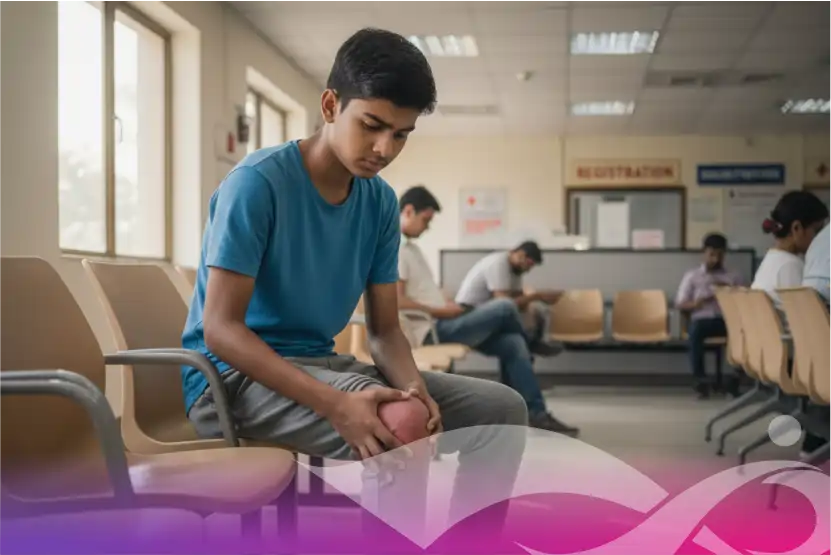
In many children and teenagers, pain in the leg or arm is first seen as something common — maybe a sports injury, a fall, over-exertion, growing pains. Life continues. They go to school, play, move around, and the discomfort lingers quietly in the background. At first it appears after activity. Later, it appears while resting as well. Parents notice that the child avoids putting weight on that side or sits out of games more often. And slowly, swelling appears near the knee, shoulder, or one of the long bones. That is usually the moment when the situation begins to feel different. In a small number of such cases, the underlying cause turns out to be Osteosarcoma, a primary bone cancer that tends to develop in growing bones. Because the beginning looks so ordinary, it is very easy to believe it is just an injury that is taking time to heal. The illness rarely starts loudly. It arrives quietly, over weeks, sometimes months.
How the Pain Slowly Changes Over Time
Families often remember the early journey very clearly later on. The pain is dull to begin with. It comes while running, then while walking, then while sitting or lying down. It becomes deeper, more fixed to one spot. Night pain increases. The child starts favouring the other limb without even realising it. Then the swelling becomes noticeable — warm, firm, gradually enlarging around the bone. On the surface, these still look like orthopedic problems. But when pain and swelling keep progressing instead of settling, the pattern begins to resemble recognised bone cancer symptoms rather than a simple sprain or sports injury. In real practice, what matters is not just that pain is present — it is how long it has stayed, how it has changed, whether it is slowly tightening its grip on daily movement. Pain that keeps moving forward quietly is rarely routine.
When Swelling Makes the Concern Stronger
As time passes, movement becomes restricted. Some children describe stiffness or weakness around the joint. The limb may begin to look slightly different compared to the other side. In a few situations, even a small fall causes sudden severe pain — because the affected bone has become fragile from inside.Parents often look back and realise the story was gradual — first discomfort, then avoidance of activity, then swelling — but nothing seemed alarming enough at first to demand urgent testing. That delay is common, and it happens because the early story looks so ordinary.
Why Timely Diagnosis Changes the Path Ahead
Once symptoms persist or progress, evaluation becomes essential. Imaging and specialist assessment help doctors understand whether the lesion is benign, inflammatory, or suspicious for bone tumor cancer. Further tests — including advanced scans and biopsy — confirm the diagnosis and define how far the disease has spread, whether nearby tissues or lungs are involved, and what treatment direction is realistic. Diagnosis is not just a label. It is an understanding of stage, behaviour, and treatment response potential — all of which decide the course of osteosarcoma treatment and long-term outcome.No two patients receive the exact same plan. Age, tumour site, limb function, spread, and overall strength all shape decisions.
How Treatment Is Approached in Real Life
Modern care is multidisciplinary. In many cases, treatment includes chemotherapy combined with limb-sparing surgery wherever medically safe, with reconstruction planned in a way that preserves as much function as possible. In rare situations, amputation may still be necessary for disease control — but advances in surgical oncology have reduced how often that becomes the only option. Recovery is not only about medicine and surgery. Rehabilitation, physiotherapy, emotional support, and long-term follow-up gradually help a child regain movement, confidence, and routine. Families soon realise treatment is not one step — it is a journey guided carefully, stage by stage.
The Emotional Layer Families Rarely Talk About Aloud
Bone pain and swelling in a growing child brings fear, guilt, worry, and many unanswered questions. Parents replay earlier days in their mind, wondering if anything could have been noticed sooner. Young patients worry about walking, school, friends, sports, appearance, their future.What usually helps most is clarity — gentle, honest explanation of what the illness is, what stage it is at, what each phase of treatment will mean, and how life will gradually adjust around recovery.With time, strength returns — slowly but steadily.
When Should Someone Seek Specialist Care?
Persistent limb pain that worsens over weeks, swelling near a bone that continues to increase, night pain, difficulty bearing weight, or a child repeatedly avoiding activity on one side — these changes should never be ignored when they do not behave like ordinary injury. They do not always mean cancer — but when they keep progressing, they need timely orthopedic oncology evaluation. At IOCI, osteosarcoma care is centred on early recognition of warning signs, accurate diagnosis, thoughtful multidisciplinary planning, and compassionate guidance for patients and families through every step of treatment and recovery.
Consult us at any of our locations across IOCI Noida, Greater Noida, Mumbai, Indore, Chh. Sambhajinagar, Agartala, Saharanpur, Kanpur and Jodhpur.