





31 January 2026
When a Simple Pain in a Limb Doesn’t Settle the Way It Should
For many children and teenagers, the beginning doesn’t look frightening at all. It starts with pain in a leg, arm, pelvis, or chest wall — something everyone assumes is a small injury, maybe a sports strain, maybe growing pains. The child keeps going to school. Play a little less. Avoids running on some days. The pain keeps coming back, quietly, like it has made a place for itself. Then, after some weeks, swelling or warmth appears in the same area. The child begins to protect that limb, without saying much. And slowly, the picture stops feeling like a routine injury. In a small number of such situations, the condition later turns out to be Ewing Sarcoma, a malignant tumour seen more commonly in bone cancer in children and adolescents. Because the early story looks ordinary, families believe it will get better on its own — and the illness moves forward quietly in the background. It rarely begins with a dramatic moment. It grows into the story, bit by bit.
How Symptoms Slowly Change Instead of Going Away
When parents look back later, they remember the same pattern. The pain feels dull at first. It appears during activity. Then during rest as well. Night pain starts becoming more noticeable. The child limps slightly. Stop jumping or running. Sits out of games. After some time, swelling becomes clearly visible, and movement around the joint feels restricted. Individually, these signs still look like orthopedic problems. But when they keep returning — when they slowly intensify instead of settling — they begin resembling recognised ewing sarcoma symptoms rather than a simple injury that needs rest. In real clinical practice, doctors listen not just to what the symptom is — but how long it has been there, how it has changed, whether it is quietly progressing over time. Pain that keeps moving forward usually has a story behind it.
When the Body Starts Reflecting More Than Local Pain
Some children begin feeling tired more than usual. Fever comes and goes. Appetite reduces. Weight drops a little. A minor fall leads to sharp, unexpected pain — because the affected bone has already become weak from inside. Parents often realise later that the pattern had been forming slowly — first pain, then limitation, then swelling — but nothing looked “serious enough” in the beginning to feel alarming. That hesitation is human — and very common.
Why Getting a Diagnosis at the Right Time Changes the Path Ahead
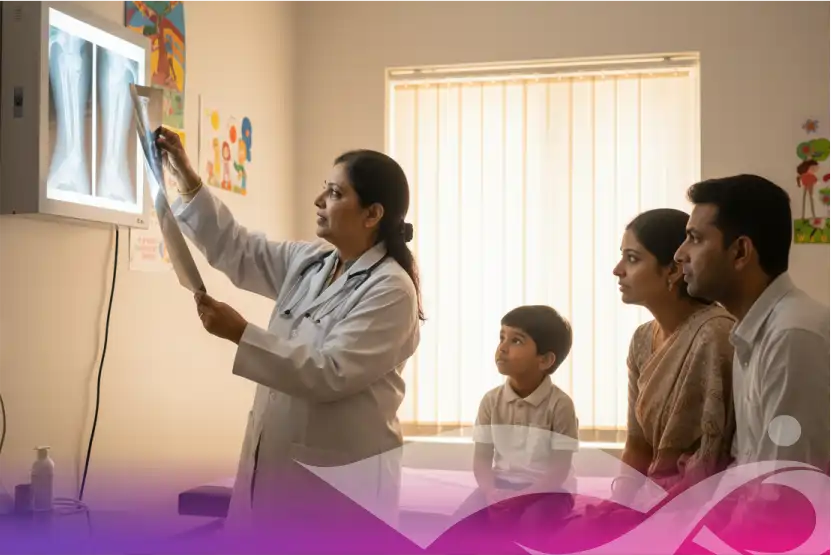
Once symptoms persist or evolve, proper evaluation becomes important. Imaging and specialist review help assess whether the lesion is benign, infectious, or suspicious for a malignant tumour. Further investigations, including scans and biopsy, confirm whether it is Ewing Sarcoma, define the spread, and check involvement of nearby tissues or lungs. Diagnosis is not just about naming the disease. It is about understanding behaviour, stage, and response potential — because these guide ewing sarcoma treatment and shape expectations for the journey ahead.Two children with similar scans may still need different plans — age, tumour site, limb function, spread, and overall strength all influence decisions.
How Treatment Usually Unfolds in Real-World Practice
Management is multidisciplinary. Treatment is usually planned in phases. In many children, chemotherapy is combined with surgery, and in selected cases radiotherapy is also used. Wherever medically safe, limb-sparing options are preferred, so that function and mobility can be preserved while still aiming for complete disease control.Recovery does not happen in one jump. It comes slowly — through rehabilitation, physiotherapy, emotional support, and regular follow-up. Families realise, over time, that treatment is not a single event — it is a journey guided step by step.
The Emotional Side That Families Often Carry Silently
A diagnosis like this does not affect only the body. Parents replay every earlier day — wondering when the pain first began, whether something could have been noticed sooner. Children worry about school, movement, friendships, sports, the way they look, and what the future will be like. What helps most is gentle clarity — understanding what the illness is, what each phase of treatment will involve, and how life will slowly adjust around recovery.Strength returns — gradually, unevenly — but it does return.
When Should Parents Seek Specialist Evaluation?
A child or teenager who has persistent limb or chest pain that keeps worsening, swelling that continues to increase, night pain, limp, restricted movement, or repeated avoidance of physical activity — especially when these do not behave like a normal injury — should be evaluated by a specialist team without delay. These changes do not always mean cancer, but when they persist or evolve, they deserve timely orthopedic oncology assessment.At IOCI, paediatric bone cancer care focuses on early recognition of subtle warning patterns, accurate diagnosis, thoughtful multidisciplinary planning, and compassionate guidance for children and their families through every step of treatment and recovery.
Consult us at any of our locations across IOCI Noida, Greater Noida, Mumbai, Indore, Chh. Sambhajinagar, Agartala, Saharanpur, Kanpur and Jodhpur.