





28 January 2026
When The Body Starts Giving Quiet Signals
For many people who are later told they have Kidney Cancer, nothing dramatic happens in the beginning. Life goes on as usual. Work. Travel. Family routine. And somewhere along the way, the body starts behaving a little differently — not painful, not alarming — just different. Some people feel more tired than usual. Appetite drops a little. A dull ache comes and goes on one side of the back, something that feels like a muscle pull. Because the kidneys are deep inside and don’t make sharp pain early on, these changes never feel urgent. Most people simply brush them aside, as anyone would. The disease continues quietly in the background.
Early Signs That Don’t Look Serious At First
The way patients describe the early phase is almost always subtle. Blood shows up in urine one day, disappears the next week, and life goes back to normal. A dull flank discomfort keeps returning on the same side. Sleep feels fine, but energy feels lower. Weight slowly drops even though diet hasn’t changed. Each sign, on its own, feels harmless. That is why people wait. But when these changes stay longer than they should, or keep re-appearing, they start fitting the pattern of recognised renal cancer symptoms rather than routine tiredness or infection. What matters most in real-world practice is not how dramatic a symptom looks — but how long it has been there, whether it keeps coming back, whether it is quietly changing over time. Most people only realise this in hindsight.
Why Many Kidney Tumours Are Found By Chance
A large number of tumours are found unexpectedly — on a scan done for back pain, stomach trouble, or a general health check. Early growths don’t always cause pain or pressure. The kidney has space to accommodate them for some time. That silence is what makes early detection difficult. People often tell us, “I felt fine… I didn’t feel sick.” And they are right — many early tumours don’t create strong symptoms at all. Some of these are later confirmed as renal cell carcinoma, the most common kidney cancer seen in adults. When patients look back after diagnosis, they realise the body had been giving very faint signals — but nothing that clearly warned them.
When Symptoms Slowly Become Clearer
As time passes, some people begin to notice blood in urine more regularly. The pain on one side feels heavier, more persistent. A lump may be felt in the flank region. Weakness increases. Appetite drops further. Weight loss becomes visible. None of this appears overnight. It builds in layers — quietly, slowly — which is why many people miss the early window.
How Diagnosis Actually Unfolds In Practice
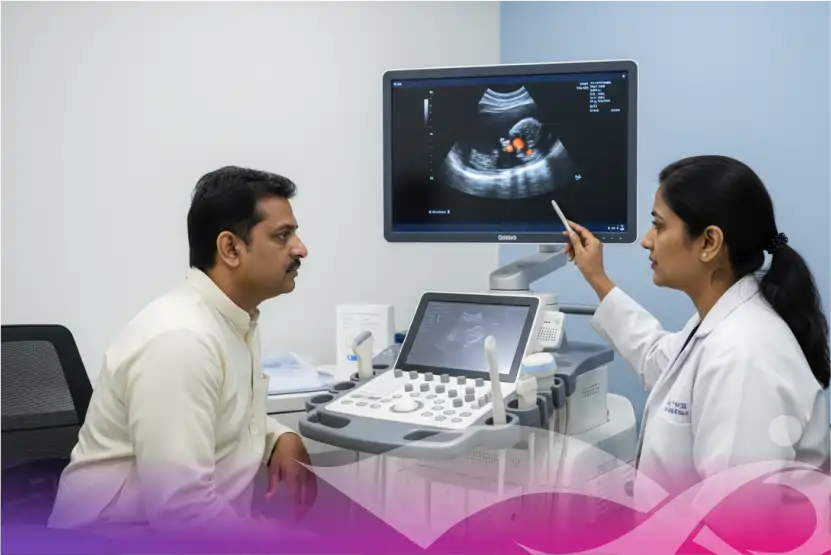
Once a scan or symptom raises concern, the next step is careful evaluation. Doctors look at history, examine the patient, and review imaging — ultrasound, CT, or MRI — to understand where the tumour is, how big it is, and whether nearby structures are affected. Diagnosis is not only about naming the condition. It is about understanding stage and extent — because that is what guides decisions around kidney tumor treatment and long-term expectations. Two patients with the same tumour size may still need different approaches — kidney function, age, medical history, and overall strength matter just as much as the scan.
How Treatment Decisions Are Approached
In suitable early-stage cases, surgery may be planned with curative intent. Sometimes only the tumour is removed and the kidney is preserved. In other situations, removing the entire kidney becomes the safer option. When disease is advanced, doctors may use systemic therapies or carefully combined treatment to control progression and maintain quality of life. These decisions are rarely made by one doctor alone. Most cases are discussed by a multidisciplinary team — surgeons, oncologists, radiologists, pathology and nephrology specialists — so that the plan stays realistic, humane, and centred on the person rather than just the tumour.
The Emotional Side That Patients Rarely Voice
A diagnosis like kidney cancer doesn’t just affect health — it affects certainty, sleep, confidence. People look back at earlier signs and wonder if something was missed. Families try to stay strong while processing fear and questions. The thing that helps most is clarity — honest conversation about what the diagnosis means, what stage it is at, what happens next, step by step. Follow-up after treatment becomes just as important as treatment itself — helping track recovery and detect new changes early.
When Should Someone See A Specialist?
Someone who keeps noticing blood in urine, or a one-sided flank discomfort that returns again and again, or unexplained fatigue and weight loss that don’t settle with time — should not ignore these changes. They don’t always point to cancer — but when they persist or slowly evolve, they deserve proper medical evaluation. At IOCI, kidney cancer care is built around early recognition of subtle warning signs, accurate diagnosis, thoughtful stage-appropriate planning, and compassionate guidance for patients and families through every step of care.
Consult us at any of our locations across IOCI Noida, Greater Noida, Mumbai, Indore, Chh. Sambhajinagar, Agartala, Saharanpur, Kanpur and Jodhpur.