





19 December 2025
When people hear that stomach cancer is more common in Asia than in many other parts of the world, the first reaction is usually surprise. But for doctors working in this region, it isn’t surprising at all. We see certain patterns so often that the question shifts from “Why does it happen?” to “How early can we catch it?”. Understanding why stomach cancer is common in Asia means looking at everyday life — the way people eat, the way families cook, and even the infections that quietly stay in the body for years without causing any immediate trouble.
Food Traditions That Stayed for Generations
Across many Asian countries, food is not just fuel. It’s culture. It’s family. It’s identity. Pickles on the dining table. Salted fish in coastal regions. Fermented foods in colder areas where preservation has been a way of life for centuries. None of these are “bad.” They’re part of who we are. But when eaten regularly for decades, they irritate the stomach lining more than people realize. And irritation repeated over years slowly increases risk which becomes one of the key risk factors for gastric cancer in Asia.
People don’t feel anything in the beginning. Sometimes not for years. The stomach adapts. It adjusts. Until one day it doesn’t.
The Infection Nearly Everyone Forgot About
There’s something else that hides in the background, a bacteria called H. pylori. Many people in Asia carry it. Most have no idea. It passes easily within families. It stays quiet. And over time, this small infection changes how the stomach behaves. It creates chronic inflammation. And chronic inflammation creates risk.
This simple, silent organism explains a large part of why stomach cancer is common in Asia, because it affects millions. By the time people feel discomfort serious enough to investigate, the infection has usually stayed in the body for years.
Genetics That Add to the Story
There’s also a genetic layer. Some families, especially in certain regions of Japan, Korea, and parts of India, have higher susceptibility. This does not mean stomach cancer is “destined.” It simply means that if certain food habits, infections, and family tendencies come together, risk becomes stronger. And that contributes significantly to stomach cancer prevalence in Asian countries and preventing stomach cancer in Asia becoming a major public health goal.
The Symptoms That Hide in Daily Life
One of the biggest challenges is that early stomach cancer doesn’t announce itself loudly. People get bloating. Mild indigestion. A fullness that feels unusual but not alarming. These symptoms overlap completely with everyday digestive issues. Most people wait. They change their diet for a few days. They try home remedies. And the pattern gets missed.
This is one reason stomach cancer often appears in advanced stages in Asia as people don’t recognize the signals early because the signals feel too ordinary.
Why the Disease Seems More Visible in Some Countries
Japan and South Korea diagnosed stomach cancer early simply because they started screening programs decades ago. When you look for a disease, you find it. When you find it early, survival improves. These countries show us that stomach cancer prevalence in Asian countries and preventing stomach cancer in Asia are deeply connected. Awareness changes outcomes.
Other regions India included are still catching up. Not because the disease is new, but because screening is not routine and symptoms are too easy to ignore.
What Prevention Looks Like for an Ordinary Person
Prevention doesn’t require dramatic changes. It starts with simple ones. Reducing very salty foods. Limiting pickles to small portions. Treating H. pylori instead of living with long-term acidity. Eating fresh foods more often. Listening to the body instead of adjusting to discomfort for months.
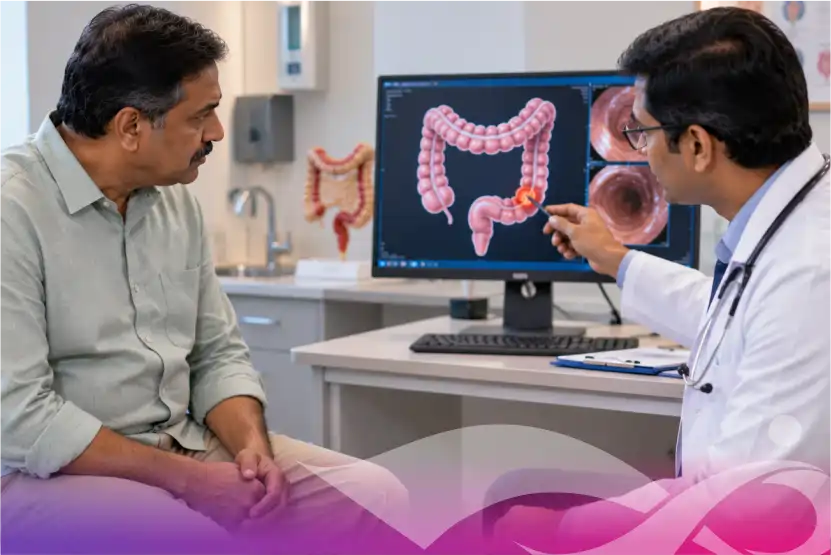
Most importantly, people with persistent digestive issues, even mild ones should not wait. Early endoscopy can detect changes long before they turn into cancer.
When people understand risk factors for gastric cancer in Asia, they start noticing patterns in their own habits. And noticing is often the first step toward changing.
Awareness Saves More Lives Than Medicine Alone
Stomach cancer doesn’t appear suddenly. It builds over years. And because it builds slowly, you have room to act early. Understanding why stomach cancer is common in Asia gives individuals, families, and doctors a clearer sense of what to watch for. It makes prevention possible. And it makes early detection far more likely.
Consult us at any of our locations across IOCI Noida, Greater Noida, Mumbai, Indore, Chh. Sambhajinagar, Agartala, Saharanpur, Kanpur and Jodhpur.