




28 May 2026
Radiation therapy has been treating cancer for over a century. The physics behind it using high energy beams to damage DNA inside cancer cells and stop them dividing has not fundamentally changed. What has changed dramatically is the precision with which those beams can be aimed, tracked, and delivered. TrueBeam radiation therapy sits at the current edge of that precision. Patients looking for the best cancer radiation hospital are right to ask specifically about it because the gap between what TrueBeam delivers and what conventional radiation delivers is not marginal. As advanced radiation therapy reshapes oncology infrastructure across the country, understanding that gap is what allows patients to make genuinely informed treatment decisions. The truebeam cancer treatment cost in India is one part of that decision but only one part.
Where Conventional Radiation Falls Short
To understand TrueBeam's value, start with the limitations of what came before it.
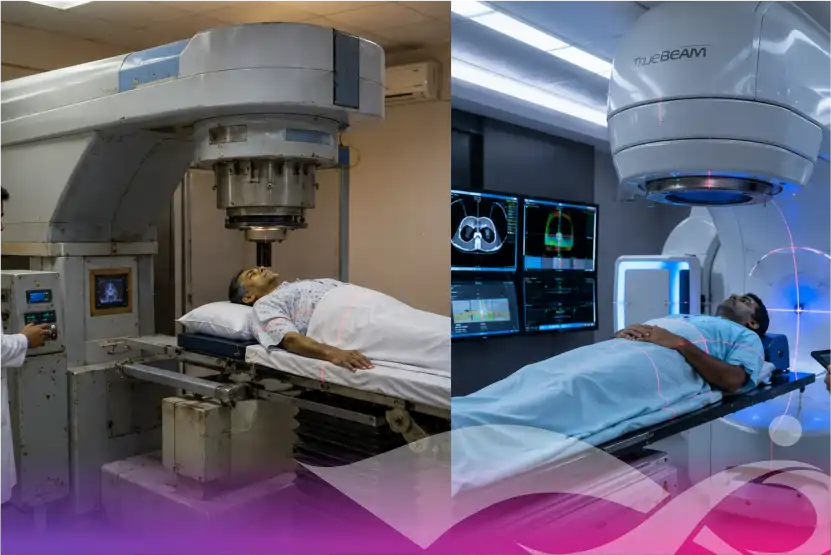
Conventional external beam radiation directs high-energy X-rays at the tumour from multiple angles. The dose accumulates at the intersection of those beams, targeting the tumour while the individual beams pass through surrounding tissue. The problem is that the body is not static. Patients breathe. Tumours shift with digestion, with bladder filling, and with patient movement on the treatment table. Older radiation systems cannot account for this movement in real time.
The response to movement in conventional systems is a margin, a buffer zone added around the tumour in the treatment plan that expands the irradiated area to account for the uncertainty of where the tumour actually is at the moment of delivery. That margin protects against missing the tumour. It also means healthy tissue within that margin receives a significant radiation dose alongside the cancer cells being targeted.
The side effects that radiation therapy has historically carried fatigue, localised tissue damage, and inflammation in adjacent organs are largely the consequence of this imprecision rather than an inherent feature of radiation treatment itself.
What TrueBeam Actually Does
Truebeam radiation therapy in India is a radiation delivery platform built around solving the precision problem from multiple directions simultaneously.
The first element is continuous real-time imaging during treatment delivery. TrueBeam does not simply image the patient during setup and then deliver radiation based on those images. It integrates imaging into the delivery process itself, confirming tumour position at the moment radiation is being administered rather than assuming it has not shifted since the pre treatment scan.
The second element is motion tracking and gating. For tumours that move, lung tumours moving with respiratory cycles and abdominal tumours shifting with gut movement, TrueBeam monitors that movement and synchronises delivery to the tumour's actual position. Radiation fires when the tumour is within the planned window and pauses when it moves outside it. The tumour receives the intended dose. The tissue surrounding it receives significantly less.
The third element is delivery speed. TrueBeam operates at dose rates substantially higher than conventional systems, completing in minutes what older machines required twenty to thirty minutes to deliver. Faster delivery means less time for patient movement to introduce error, more consistent positioning accuracy across sessions, and less cumulative physical fatigue for patients completing multi-week treatment courses.
What the Clinical Difference Means for Patients
The precision advantage does not stay abstract. It shows up in specific, measurable ways in the patient experience.
Reduced side effects. Less healthy tissue receiving a radiation dose means fewer side effects from that tissue. Prostate cancer patients experience less bowel and urinary irritation. Breast cancer patients retain more healthy lung tissue. Brain tumour patients have a lower risk of cognitive effects from radiation exposure to healthy brain matter surrounding the tumour.
Access to treatments not previously possible. Stereotactic body radiation therapy, delivering very high doses across five sessions or fewer rather than twenty-five to thirty conventional sessions, requires TrueBeam-level precision to achieve safely. Some tumour locations that were historically considered too risky to treat with radiation because of proximity to the spinal cord, brainstem, or optic nerves become treatable at acceptable risk levels with TrueBeam's precision that older systems cannot match.
Shorter treatment courses. When fewer sessions are needed and each session is faster, the total time commitment of radiation treatment shrinks. For patients managing work, family, and travel to treatment centres, this matters practically as well as clinically.
Truebeam Cancer Treatment Cost in India — What Drives It
The truebeam cancer treatment cost in India is not a single number. It depends on the cancer type, the specific technique used, the number of sessions in the treatment course, and the facility providing treatment.
Stereotactic treatments of five sessions or fewer at a high dose per session cost differently from conventional thirty-session courses even when delivered on the same machine, because the planning complexity, specialist time, and quality assurance processes differ substantially.
What patients often find when they compare costs honestly is that the premium for TrueBeam-based treatment, where it exists, needs to be evaluated alongside what it replaces. Fewer side effects mean less supportive medication across the treatment course. Fewer sessions mean less time away from income-generating activity. Lower complication rates mean fewer additional interventions. Costs that look higher at the treatment line frequently look different when the full picture is included.
Questions Worth Asking Any Facility
When evaluating a facility presenting itself as the best cancer radiation hospital in India, equipment alone is not sufficient evidence.
Is the TrueBeam system operated by radiation oncologists with specific experience in the technique your tumour type and location require? SBRT for a lung tumour and IMRT for a prostate tumour both use TrueBeam and require different specialist expertise. The machine's capabilities are only as useful as the team operating it.
Is treatment planning multidisciplinary? Radiation oncology input without simultaneous input from medical oncology, surgical oncology, and diagnostic radiology produces a treatment plan with less complete information than one reviewed across specialities before decisions are finalized.
What are the quality assurance protocols? TrueBeam's precision is achieved only when planning is finalised. Positioning and delivery verification all meet rigorous standards. Ask specifically how the facility verifies that what was planned is what was actually delivered session by session.
Conclusion
Advanced radiation therapy in India in 2026 is producing real improvements in cancer treatment outcomes not through incremental refinement of older approaches but through technology that operates on a different level of precision entirely.
TrueBeam is not an upgrade. It is a different category of radiation delivery. For patients whose treatment decisions include radiation therapy, understanding that difference and seeking it out at a facility equipped and experienced enough to actually deliver it is worth the effort.
This article is for informational purposes only and does not replace professional medical advice.