





18 February 2026
When Becoming Familiar With Your Own Body Helps You Notice Small Changes Sooner
For many women who are later diagnosed with Breast Cancer, the beginning is not dramatic. There is no sudden pain or emergency. It usually starts with something small — a tiny area that feels different under the fingers, a little thickening, a small lump noticed accidentally in the shower, or simply a sense that one breast no longer feels the way it always has. There is no urgency at first. Life goes on. Work, home, routine, everything continues. And then, one day, while bathing or getting dressed, the same change is felt again — a little clearer this time — and the thought appears… this wasn’t here before. That is often the moment awareness begins.
When Self-Examination Becomes Less About Fear and More About Knowing What Is Normal for You
Self-examination is not about constantly searching for disease. It is about knowing what your breasts normally feel like, so that when something new appears, your hands recognise it earlier than your eyes do. Some women feel a firm lump. Some feel an area that seems thicker than the rest. Some notice skin dimpling, or the nipple looking slightly different. Over time, when these do not go away, they start resembling recognised breast lump symptoms rather than routine hormonal changes. What matters in consultation is not only what was felt — but when it started, whether it changed, and whether it feels new compared to how the breast has always been in the past. Most bodies speak softly at first.
Why Many Women Still Wait Before Getting It Checked
Some women believe that if there is no pain, it cannot be serious. Some think it is hormonal swelling that will settle. Some feel anxious about tests. Some are busy and keep postponing the visit. All of this is common. And human. Early disease often stays quiet. The breast may look normal from the outside while slow changes happen inside — changes the hand may feel before the eyes see. Self-examination gives the body a chance to be heard earlier.
When the Changes Begin to Feel More Real
With time, the lump may feel more defined. The skin may look slightly puckered. The nipple may pull inward. Discharge may appear. A little heaviness develops on one side. Sometimes there is swelling in the armpit because nearby lymph nodes respond. None of this appears overnight. It builds slowly — until one day it no longer feels like a routine change. That is when evaluation matters. Not because every lump is dangerous — but because certainty is better than doubt.
How Diagnosis Usually Moves Ahead in Clinic
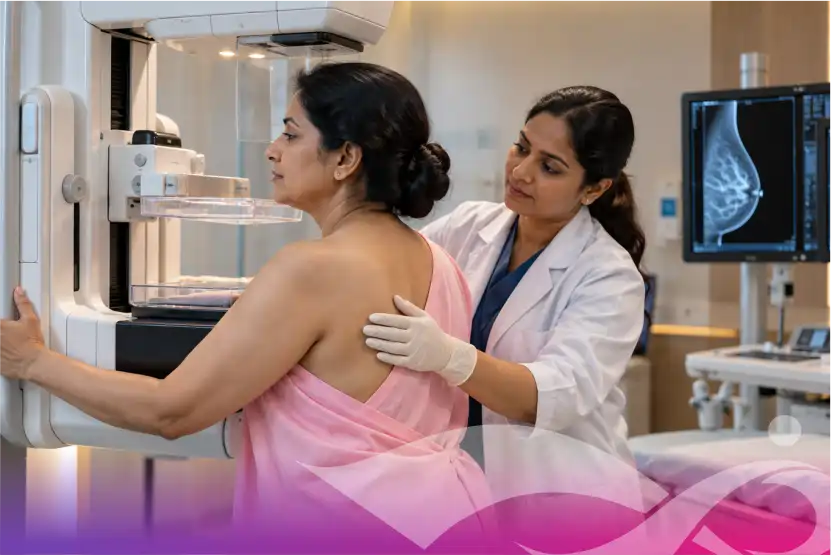
Doctors begin with examination and imaging, such as mammography or ultrasound, to understand the nature of the finding. If required, a biopsy is done to confirm what the tissue really is. Those results guide decisions about breast tumor treatment, making sure the plan is safe, timely, and right for the patient. Diagnosis is not only a name. It is an understanding of behaviour, biology, spread pattern, timing — because people with similar-feeling lumps may still need different treatment depending on breast cancer stages, health condition, age, and personal priorities. Care must match the woman, not just the report.
Why Self-Examination Still Matters
Self-examination does not replace screening tests. It does not replace doctor visits. But it helps a woman recognise when her body feels different from before — and that awareness brings her to care sooner instead of later. It is not fear-driven. It is self-respecting. The earlier a change is recognised, the clearer and kinder the path of treatment usually becomes.
When Should Someone Seek Specialist Evaluation?
A woman should seek medical review if she notices a persistent lump, thickening, change in skin or nipple, unusual discharge, swelling in the armpit, or any change that does not feel like her normal breast pattern. These do not always indicate cancer — but when they remain or slowly evolve, they should not be ignored. At IOCI, breast cancer care is centred on early recognition, accurate diagnosis, thoughtful stage-appropriate planning, and compassionate support for women and their families through every step of treatment and recovery.
Consult us at any of our locations across IOCI Noida, Greater Noida, Mumbai, Indore, Chh. Sambhajinagar, Agartala, Saharanpur, Kanpur and Jodhpur.