




30 May 2026
India's summer is difficult for everyone. For cancer patients undergoing active treatment, it presents a layer of physical challenge that most people around them do not fully appreciate. The body managing chemotherapy or radiation is already working harder than normal, regulating temperature, processing toxic medication, rebuilding damaged cells, and fighting infection with a compromised immune system. Add peak summer temperatures to that picture and the margin for error shrinks considerably. Proper cancer patient care in summer in India is not optional seasonal advice. It is a clinical necessity that affects whether treatment proceeds on schedule, whether complications arise, and how completely the body recovers between cycles.
Why Summer Specifically Creates Problems for Cancer Patients
Understanding why heat and cancer treatment interact badly requires understanding what both individually do to the body.
Chemotherapy drugs target rapidly dividing cells, cancer cells primarily, but also healthy cells in the digestive lining, immune system, and other tissues. The side effects that follow, nausea, vomiting, fatigue, reduced appetite, and temperature regulation difficulty, reflect this widespread cellular impact. The body's capacity to maintain homeostasis, including temperature homeostasis, is reduced during active treatment.
Summer compounds every one of these challenges. Sweating increases fluid and electrolyte loss at the exact time when a patient's intake is already reduced by nausea and appetite suppression. Heat increases the perceived intensity of fatigue, which is already one of the most debilitating chemotherapy side effects. Certain chemotherapy drugs increase photosensitivity, making sun exposure more physically taxing than it would be for a healthy person. And the immune suppression that accompanies many chemotherapy protocols means that the inflammatory and infectious risks of heat exposure and dehydration are higher than they would otherwise be.
Chemotherapy side effects in heat do not simply add to each other. They multiply. A patient managing moderate nausea in winter may find that same level of nausea combined with a 42-degree afternoon genuinely debilitating in ways that prevent adequate fluid intake and create a dehydration spiral.
Hydration — The Most Critical Management Priority
Hydration during cancer treatment in India in the summer months is the single most important practical intervention a patient and caregiver can prioritise.
Dehydration in cancer patients is not merely uncomfortable. It reduces kidney clearance of chemotherapy drugs, which can cause toxicity to accumulate at levels the treatment protocol did not anticipate. It worsens fatigue, worsens nausea, reduces blood pressure, and, in severe cases, can require hospital admission for intravenous fluid replacement, disrupting the treatment schedule.
The challenge is that thirst is an unreliable indicator of hydration status in patients whose normal homeostatic signals are already disrupted by treatment. Waiting to drink until thirst appears means the deficit has already developed.
The practical approach is small volumes of fluid consistently across the day rather than large amounts infrequently. Plain water works. Coconut water provides electrolytes sodium, potassium, and magnesium that plain water does not replace and that sweating depletes. Homemade nimbu pani without excess sugar, thin buttermilk or chaas, and light vegetable soups contribute both fluid and electrolytes simultaneously.
What to avoid: sugary cold drinks, which create osmotic fluid shifts that worsen dehydration over time. Excessive caffeine, which acts as a mild diuretic. Ice-cold drinks consumed rapidly, which can trigger nausea in patients already managing gastric sensitivity.
Cancer Patient Diet in Summer — Practical Eating Guidance
Cancer patient diet adjustments in summer are driven by two realities: heat suppresses appetite independently of chemotherapy, and high temperatures make heavy, oily, or spiced foods harder to tolerate even for healthy people.
The goal during summer months is nutrient density in small, frequent portions that are easy to prepare, easy to eat, and easy to digest.
Fresh fruit provides fluid content alongside vitamins and natural sugars. Watermelon, over 90 per cent water, is particularly useful for patients struggling with fluid intake. Papaya supports digestion. Mango in moderate quantities provides caloric density for patients losing weight. These are culturally familiar, widely available, and require no preparation.
Curd and buttermilk serve multiple functions protein source, probiotic support for a gut lining damaged by chemotherapy, cooling effect, and high palatability even when appetite is reduced. A bowl of curd rice is a complete, easy meal that most patients tolerate well even on difficult treatment days.
Khichdi remains one of the most practical options in cancer nutrition, generally a complete protein and carbohydrate in a single, soft, easily digestible preparation and flexible enough to add ghee for caloric density when weight maintenance is a concern.
Avoid heavy fried foods, excessive red meat, and highly spiced preparations during peak treatment periods in summer. Not because these are inherently harmful outside of a treatment context, but because the digestive system during chemotherapy does not have the capacity to process them without compounding the nausea and discomfort already present.
Practical Heat Protection During Treatment
Chemotherapy side effects in the heat are best managed by reducing heat exposure rather than treating their consequences after they develop.
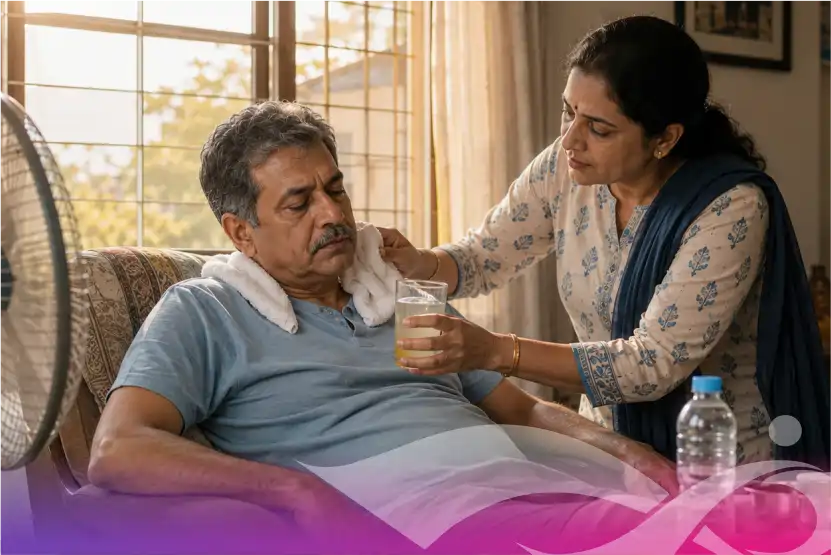
Stay indoors between 11 a.m. and 4 p.m. during May and June whenever possible. If travel or appointments require going out, loose cotton clothing in light colours reduces heat absorption. A damp cloth on the neck and wrists provides meaningful cooling.
Keep the living environment as cool as practically possible. Fans positioned to move air across the body are more useful than fans blowing hot air from outside. Air conditioning, where available, should be used without guilt. This is not comfort management, it is temperature management for a body that cannot regulate itself efficiently during treatment.
Rest is not laziness during summer treatment. It is a physiological necessity. Short rest periods across the day, twenty to thirty minutes lying down in a cool room, prevent the cumulative fatigue that builds when a patient pushes through heat stress and treatment side effects simultaneously.
Warning Signs That Need Medical Attention
Some symptoms during summer require immediate medical contact rather than home management.
Urine that is dark yellow or amber indicates significant dehydration and warrants either increased fluid intake if the patient can tolerate it or a call to the treating oncologist. Dizziness, confusion, or sudden severe weakness during heat exposure suggests heat exhaustion layered on top of treatment fatigue. A fever above 38 degrees in a chemotherapy patient is always a medical concern because infection risk is elevated. Summer heat masks whether a temperature elevation is environmental or infectious, and the distinction requires clinical assessment.
Vomiting that prevents any fluid intake for more than six hours during summer requires medical evaluation. This is a situation that can spiral rapidly in heat into dehydration, requiring intravenous support.
Why IOCI for Oncology Care in Summer
At IOCI, oncologists actively account for seasonal health factors in treatment monitoring not as an afterthought but as part of how care is structured through the year. Cancer patient care in summer in India ,adjustments modified hydration guidance, dietary support, and treatment timing where flexibility exists are part of the conversation at follow-up visits during May and June.
Patients managing hydration during cancer treatment in summer who have questions between appointments have access to the care team rather than navigating those decisions alone. The difference between a patient who manages summer treatment safely and one who develops a preventable complication is often the quality of guidance and access they had in the weeks preceding that complication. Patients might want to think about going to a specialised oncology centre with a wide range of experts.