





19 September 2026
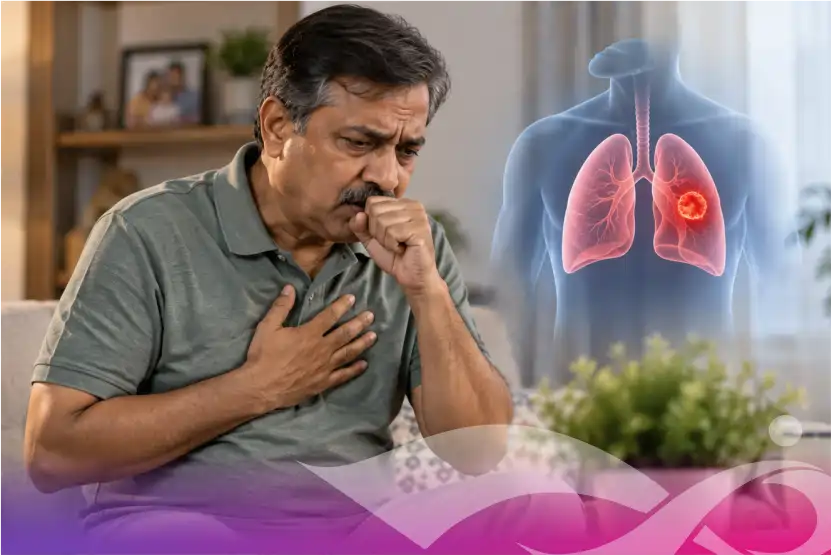
A cough that won't quit. Breathlessness that comes on suddenly. Fatigue that no amount of rest seems to fix. Most people brush these off, especially when the weather's changing and everyone around seems to have some version of the same cold. But when these symptoms linger, they can be lung cancer symptoms in India that doctors urge patients not to ignore. Lung cancer doesn't usually make a dramatic entrance in its early stages, which is precisely why noticing the smaller, quieter changes in the body matters so much.
Why Lung Cancer Is So Easy to Miss Early On
There's a fairly simple reason lung cancer slips under the radar for so long, lung tissue just doesn't have many pain receptors. A tumour can sit there growing for a while before it actually causes trouble anyone would notice. People often wait longer than they should before seeking help because the early symptoms resemble a cold, seasonal allergies, or a long-time smoker's cough. Doctors keep repeating the same point for a reason: anything that lingers past what feels normal deserves a second look.
Early Signs of Lung Cancer Worth Paying Attention To
A few of the more common early signs of lung cancer include:
-
A cough lasting more than two to three weeks, or one that suddenly changes in character
-
Coughing up blood, even a small amount
-
Chest pain that gets worse with deep breaths, coughing, or laughing
-
Breathlessness during activities that never used to leave you winded
-
Hoarseness that won't go away
-
Unexplained weight loss
-
Chest infections that keep coming back
-
Tiredness that doesn't lift no matter how much you rest
None of these confirm lung cancer by themselves plenty of far more common conditions cause the exact same complaints. But when several show up together, or simply refuse to go away, it's worth getting checked rather than waiting at home.
Who's More Likely to Be at Risk
Smoking is still the biggest single risk factor, though it's far from the only one. Long-term exposure to secondhand smoke, air pollution, occupational exposure to substances like asbestos, and a family history of lung cancer all push the risk higher too. People over 50 carrying any of these risk factors are generally advised to take respiratory symptoms more seriously rather than assuming it's nothing.
How Lung Cancer Diagnosis Actually Works in India
Lung cancer diagnosis in India usually begins with imaging a chest X-ray first, and then a CT scan if that X-ray shows anything worth a closer look. From there, doctors typically move to a biopsy to confirm whether the growth is actually cancerous, along with a PET-CT scan to check whether it's spread elsewhere. Molecular and biomarker testing has also become fairly standard now, since it helps pin down the exact subtype of lung cancer and points toward which treatments are likely to work. None of these steps happen alone each result adds another piece to the picture specialists are putting together before deciding what comes next.
Lung Cancer Treatment Options in India
Lung cancer treatment in India is shaped almost entirely by three things. The stage at diagnosis, the tumour's genetic makeup, and the patient's overall health. Broadly speaking, treatment can involve:
-
Surgery, when the tumour is localised and operable
-
Chemotherapy, to target cancer cells wherever they are in the body
-
Radiation therapy, either on its own or paired with other treatments
-
Targeted therapy for cancers carrying specific genetic mutations
-
Immunotherapy, which has become an increasingly important option for certain lung cancer types
More often than not, more than one of these approaches gets combined. That's really why no single specialist makes this call alone, treatment plans typically go through review across medical oncology, surgical oncology, and radiation oncology before anything gets finalised.
How Doctors Actually Decide the Right Treatment
There isn't a fixed formula here, no matter how much people wish there were. The decision depends on the cancer's stage, whether it has spread, how well the patient's lungs are functioning, their general fitness, and increasingly the tumour's molecular profile. Two patients can walk in with what looks like the same diagnosis on paper and still end up on entirely different treatment paths once all of this gets weighed together.
When You Should See a Lung Cancer Specialist
If a cough or breathlessness has lasted more than three weeks, if you've coughed up blood, or if your weight is dropping without explanation, you should see a lung cancer specialist in India rather than waiting. This holds especially true for long-term smokers or anyone with a family history of the disease. At IOCI, patients work with a multidisciplinary oncology team that reviews each case through the International Tumour Board, so treatment decisions never rest on just one opinion. For those already diagnosed elsewhere who want another set of eyes on their reports, IOCI's Second Opinion service is also available.
Conclusion
Catching the early signs of lung cancer and acting on them without delay can genuinely change how treatment unfolds. If something's been nagging at you and won't go away, don't wait for it to get worse get it looked at. IOCI's oncology team, backed by its multidisciplinary tumour board, can guide you through diagnosis and treatment planning at whatever stage you're at.