




21 September 2026
Breast cancer remains one of the most common cancers among women in India, and catching it early can genuinely change the course of treatment. Breast cancer screening in India leans mainly on three things regular clinical checks, mammography, and simply staying aware of changes in your own body. Finding something at an early stage, before it's breast cancer, has the chance to spread, it usually opens up more treatment options and leads to a gentler overall treatment experience.
Why Breast Cancer Screening Actually Matters
Here's the tricky part many breast cancers don't show any obvious symptoms early on. By the time a lump is actually felt, the cancer may have already been growing quietly for a while. Screening exists to close that gap, catching something suspicious before you notice it yourself. Which is why doctors keep saying the same thing over and over: don't wait for a symptom to show up before getting checked.
Breast Cancer Symptoms in Women Worth Watching For
Some of the more common breast cancer symptoms in women include:
-
A new lump or thickening in the breast or underarm
-
Changes in breast size, shape, or contour
-
Skin changes such as dimpling, redness, or puckering
-
Nipple discharge, especially if it's blood-tinged
-
A nipple that suddenly turns inward
-
Persistent pain localised to one specific area
Most breast lumps end up being non-cancerous, but that's not something worth assuming on your own without a proper check. Any new or unusual changes should be examined rather than just monitored.
Who Should Get Screened, and From What Age?
Screening advice shifts a little depending on age and individual risk, but broadly speaking:
-
Women in their 20s and 30s are encouraged to simply know how their breasts normally look and feel
-
Clinical breast exams tend to become more routine from the late 30s onwards
-
Mammography is typically recommended starting around age 40, or earlier for anyone with a strong family history
-
Women carrying a known genetic risk, such as BRCA mutations, are often advised to start screening sooner and more frequently
A family history of breast or ovarian cancer, dense breast tissue, or previous radiation exposure to the chest are all reasons a doctor might suggest starting earlier than the general guideline.
Mammogram for Breast Cancer in India: What Actually Happens
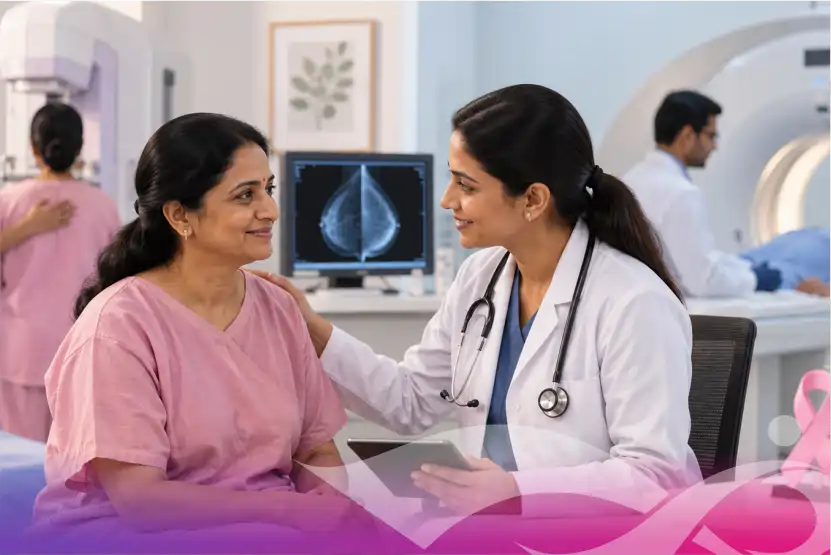
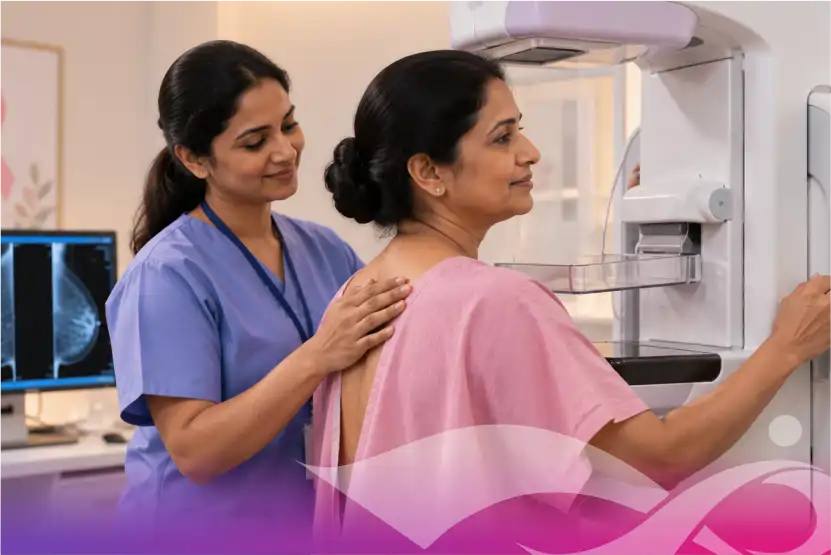
In India, a mammogram is usually the first screening tool doctors reach for, largely because it can pick up changes years before anything would ever be felt as a lump. The procedure itself is quick breast tissue gets compressed briefly so a clear image shows up on the X-ray. It can feel a little uncomfortable, but it's over within minutes. If something looks unclear, doctors will often follow up with an ultrasound or MRI to get a better look before deciding whether a biopsy is even needed.
How Diagnosis Moves Forward From There
If a mammogram or clinical exam turns up something worth investigating, a biopsy is usually the next step to confirm whether the tissue is cancerous. If it is, further testing, including hormone receptor and HER2 status, helps pin down exactly what type of breast cancer is involved. This detail matters more than people often realise, because breast cancer is not just one single disease. Different subtypes respond very differently to treatment.
Breast Cancer Treatment Options in India
Breast cancer treatment in India is shaped by the cancer's stage, its subtype, and the patient's overall health, and it usually pulls together more than one approach:
-
Surgery, ranging from breast-conserving procedures to a full mastectomy depending on how far the disease has spread
-
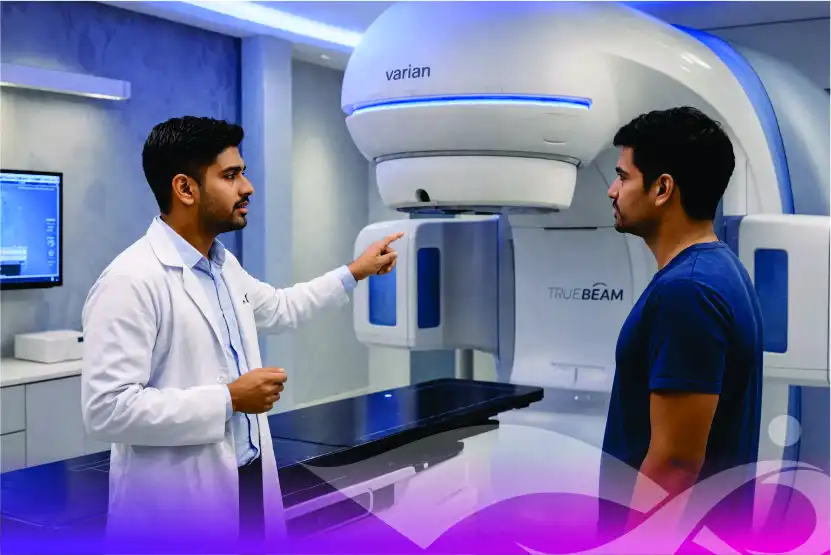
Radiation therapy, often following surgery to lower the chance of recurrence
-
Chemotherapy, used either before or after surgery depending on the specific case
-
Hormone therapy, for cancers that are hormone receptor-positive
-
Targeted therapy, specifically for HER2-positive cancers
A multidisciplinary team typically reviews each case before finalising anything, since the order of these treatments is combined in matters almost as much as choosing them in the first place.
When You Should Consult a Breast Cancer Specialist
Any new lump, ongoing breast pain, or an unusual nipple change is reason enough to see a breast cancer specialist in India, especially if it doesn't clear up within a couple of weeks. Women with a family history should also talk to a specialist about when to start screening rather than simply defaulting to the general guidelines everyone else follows.
At IOCI, patients have access to in-house mammography and diagnostic imaging, alongside a multidisciplinary oncology team, and every case is reviewed by the international tumour board before the treatment plan is finalised. Anyone who already has a diagnosis from elsewhere and wants another opinion can also access that support through IOCI.
Conclusion
Early detection is still one of the strongest tools available against breast cancer, and it starts with simply staying aware of changes and not putting off a check-up. If something's worrying you, or you're due for screening, reach out to a specialist. IOCI's diagnostic and oncology team can guide you through screening, diagnosis, and treatment planning, backed by its multidisciplinary tumour board.