





29 December 2025
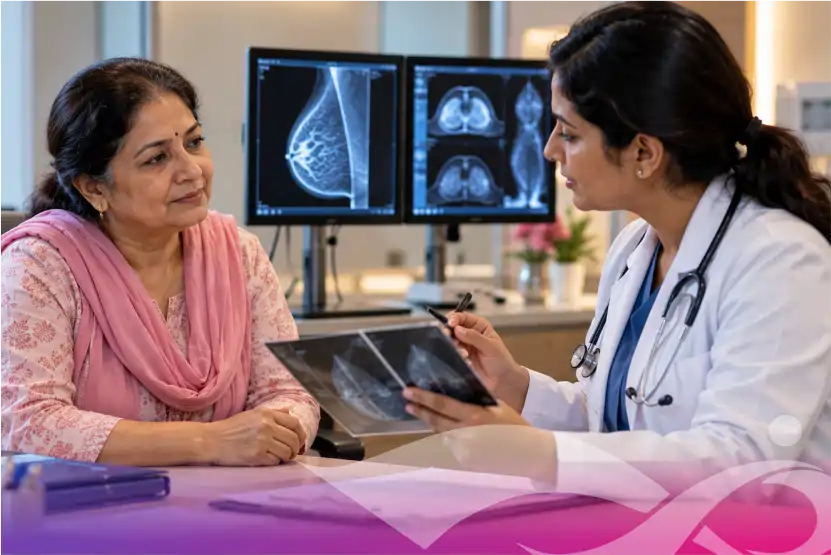
The first few minutes after hearing the diagnosis are usually the hardest. Most patients tell us they don’t remember half of what was said in the room. The mind freezes, or it runs too fast. Some feel numb, some feel angry, some scared. There is no right way to react. What you feel is what you feel. And that is okay.
Fear shows up early, and it doesn’t need to be hidden
Patients often try to look strong in front of family. They hold everything inside, but inside is exactly where fear becomes heavier. This is why early conversations matter. When we talk openly, things become less frightening.
This is where counseling for cancer patients helps. It’s not a lecture. It’s not therapy in the dramatic sense. It is simply a space to say what is bothering you, what is confusing you, what is keeping you awake at night. Patients come in with tangled thoughts and walk out feeling lighter, even if nothing else has changed yet.
Knowing the plan reduces half the panic
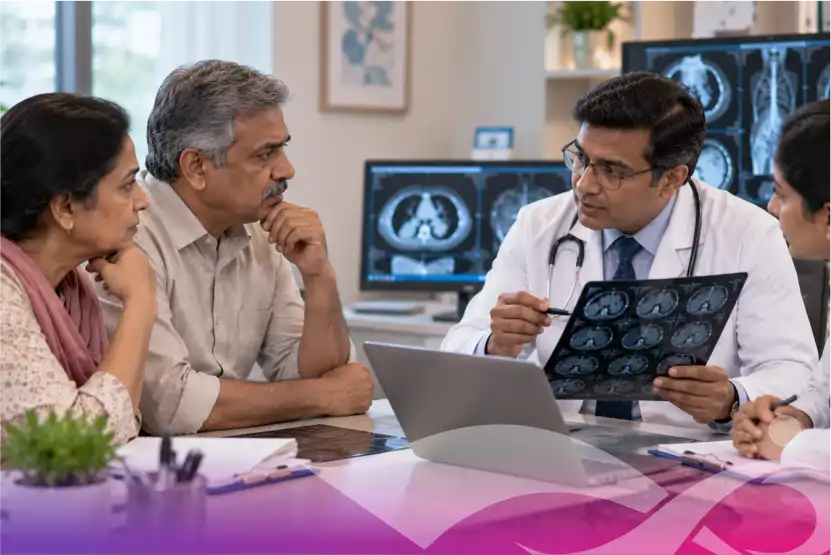
A lot of fear is built on imagination. People imagine the worst because they don’t yet know the details. When the treatment plan is explained slowly what exactly will happen, how long it takes, what the common reactions are the picture becomes clearer.
Clarity takes away noise. This is one of the strongest ways of overcoming fear of cancer treatment. Once a patient understands what to expect, the “unknown” stops being so big.
Support systems matter more than people admit
Fear gets stronger when you deal with it alone. It gets quieter when you share it. This may be with a spouse, a sibling, a close friend, or someone at the hospital. Some patients prefer speaking to someone outside the family because it feels less emotionally loaded.
Talking is not a weakness. It is a very practical way of keeping your mind steady. And for many, structured counseling for cancer patients becomes the anchor that helps them get through the emotional ups and downs.
Small daily habits help the mind settle
Patients often ask how to “stay positive.” The truth is nobody stays positive all the time. What helps is building small routines that let the mind rest. A 10-minute walk. Writing down worries. Listening to music in the morning. Eating on time. A short breathing exercise.
These simple things create space around your thoughts, which slowly makes it easier to learn how to stay positive after cancer diagnosis without forcing it.
Trust builds confidence, and confidence reduces fear
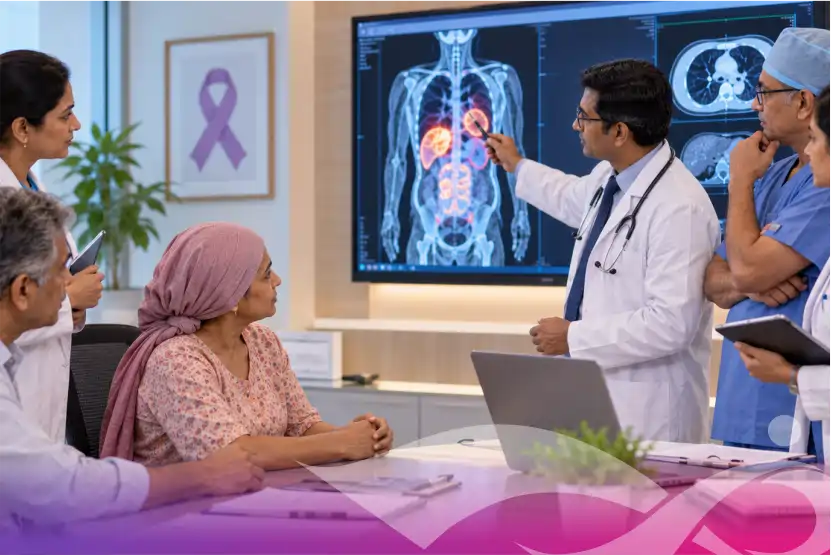
When patients realise that they have a full team behind them not just one doctor, the fear softens. Oncologists, nurses, dietitians, counselors, coordinators everyone plays a role. You are not meant to navigate treatment by yourself.
When you know you are being watched, guided, and checked at every step, the fear of “what if something goes wrong” becomes smaller.
If fear becomes overwhelming, ask for help early
Some patients hesitate to ask for emotional help because they think it will make them look fragile. But needing support during cancer treatment is normal. Very normal. If fear affects daily life, sleep, appetite, or decisions, it is time to speak to someone trained to help.
No one expects you to carry this alone.
Fear is the beginning, not the whole story
Every patient who walks in with fear eventually discovers strength they didn’t know they had. It doesn’t happen on day one. It grows slowly with information, support, reassurance, and small wins along the way.
A diagnosis is not the end of hope. It is the beginning of a new, guided chapter with a team that stands with you from the first step to the last.
Consult us at any of our locations across IOCI Noida, Greater Noida, Mumbai, Indore, Chh. Sambhajinagar, Agartala, Saharanpur, Kanpur and Jodhpur.